中文
中文 English
 Spanish
 Arabic


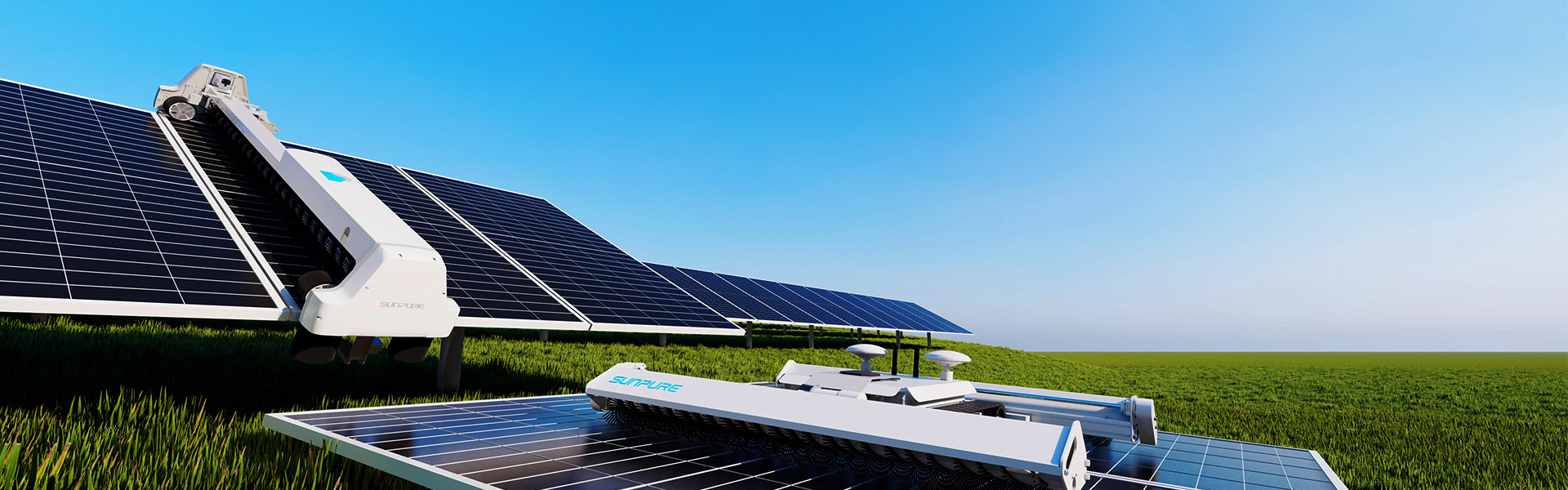
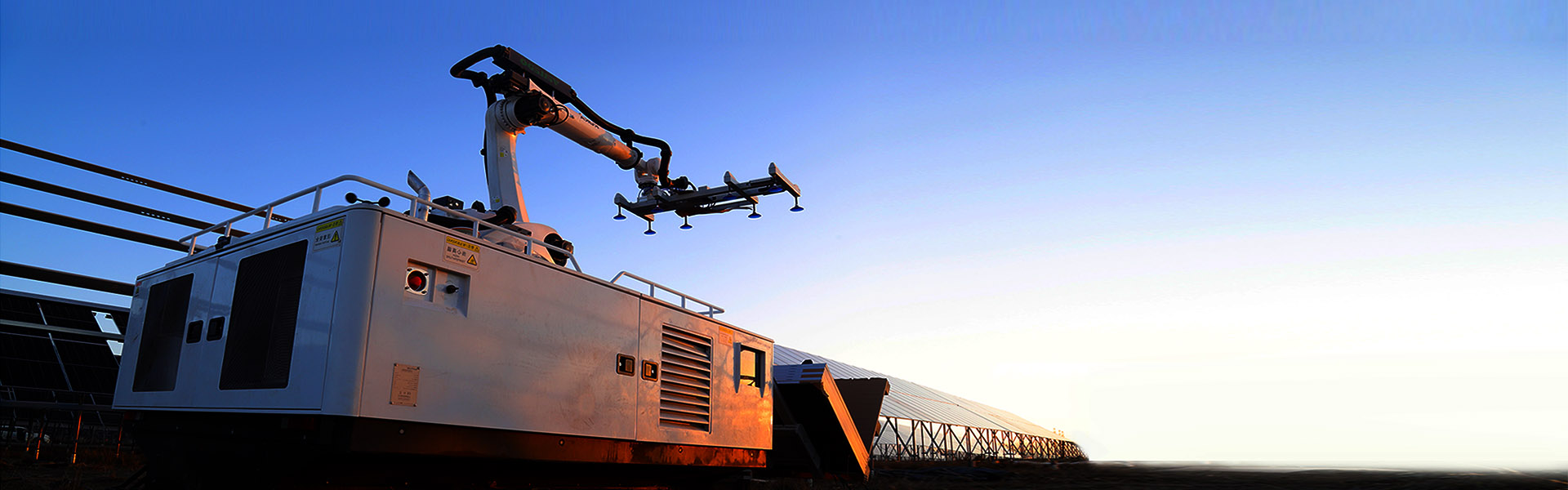




Studies show that wind disasters are the leading cause of losses in photovoltaic power stations, accounting for as much as 73%. As the “fourth major component” of photovoltaic power stations, how should intelligent cleaning robots withstand strong winds? Let’s take a look!
1 What impacts do strong winds have on cleaning robots?
If a robot’s wind-resistant design is insufficient to withstand corresponding wind forces, it may be disturbed by wind during operation, affecting travel speed and stability, and requiring manual intervention or rebooting, greatly reducing cleaning efficiency. In severe cases, the robot may tip over and become damaged, even endangering other equipment and personnel, leading to increased operational risks and economic losses.
2 What wind protection methods are currently used by cleaning robots?
Passive Wind Protection Measures
The most basic passive wind protection method is remaining at the docking station and not performing cleaning tasks. Another method is installing special slope pads or using anti-slip materials to increase friction between the robot’s wheels and the docking track to resist wind.
Active Wind Protection Measures
Active wind protection refers to improving robot stability through specific components or devices. For example, equipping robots with wind-resistant arms to firmly lock the robot at the docking station, preventing sliding along the track and overturning perpendicular to the track. These measures need to be considered comprehensively during the early design stage. Currently, active wind protection is increasingly favored by the market due to its higher controllability and stronger wind resistance capability.
3 What exclusive wind-resistant technologies do cleaning robots have?
Renjie Intelligent adopts an active wind protection strategy, combining industry-first physical wind-resistant mechanisms with intelligent systems to provide dual-layer protection for robots.
With the support of meteorological data linkage on Renjie’s intelligent cloud platform, the robots can conduct early wind warnings and make autonomous decisions. Under wind speeds below Level 7, the robots rely on built-in guide wheels and anti-slip hooks to cope with various wind directions and maintain normal operation. When strong wind warnings of Level 7 and above occur, the robots intelligently activate wind protection strategies, return in advance, and use wind-resistant arms to lock securely at the docking station, avoiding potential risks.
Renjie’s physical wind-resistant mechanism has obtained national patents, ensuring robot stability under strong wind conditions and safeguarding power station safety.

After multiple laboratory tests and outdoor field verifications, Renjie robots’ wind resistance performance has been fully validated, withstanding wind speeds of up to 55 meters per second, equivalent to Level 16 strong winds. This is sufficient to cope with “super typhoon”-level storms, tornadoes, and other extreme weather conditions. Especially in Middle East tracking system projects, full consideration has been given to structural and communication compatibility with tracking mounts, ensuring reliability under extreme wind conditions.
5 Are there real-world application cases?
Renjie robots have been extensively tested in multiple typhoon-prone regions, including Zhejiang, Jiangsu, Anhui, and Guangdong. Taking a 9.2 MW distributed rooftop photovoltaic power station in Guangzhou as an example, the project is equipped with five fully automated dry-hanging photovoltaic cleaning robots. Since officially starting operation in January this year, the system has already experienced four typhoon events without any significant impact.
In addition, Renjie Intelligent has implemented regular inspection and maintenance measures, providing early warnings on equipment conditions to ensure the stable operation of robots and supporting systems, becoming a trusted intelligent cleaning solution provider for photovoltaic power stations.