中文
中文 English
 Spanish
 Arabic


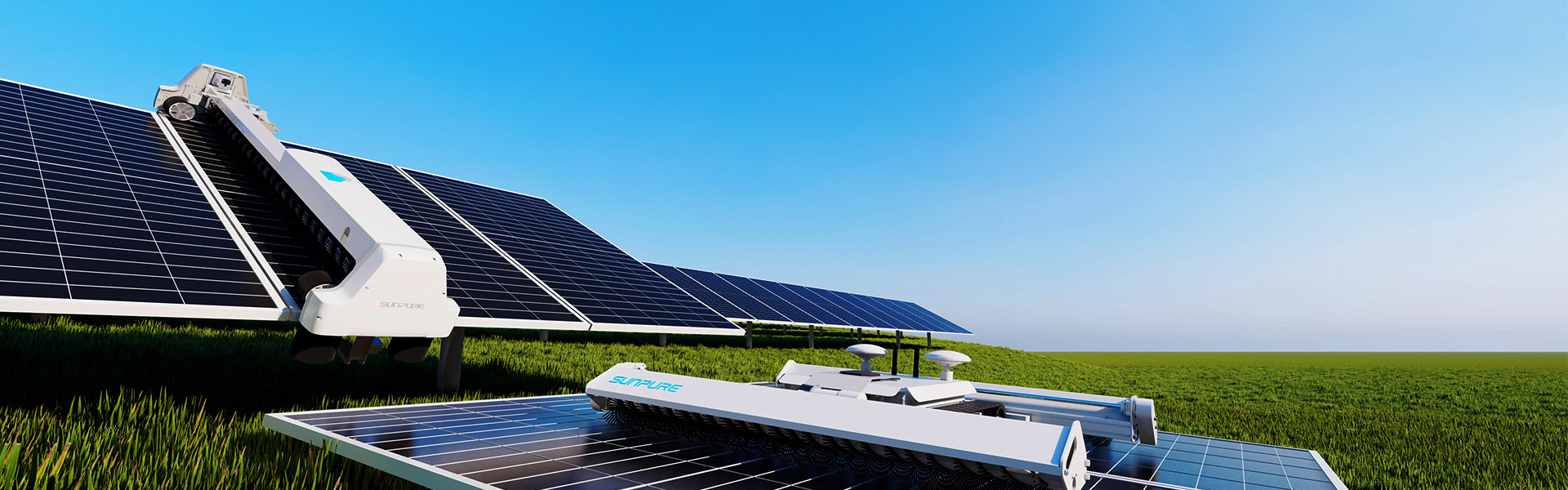
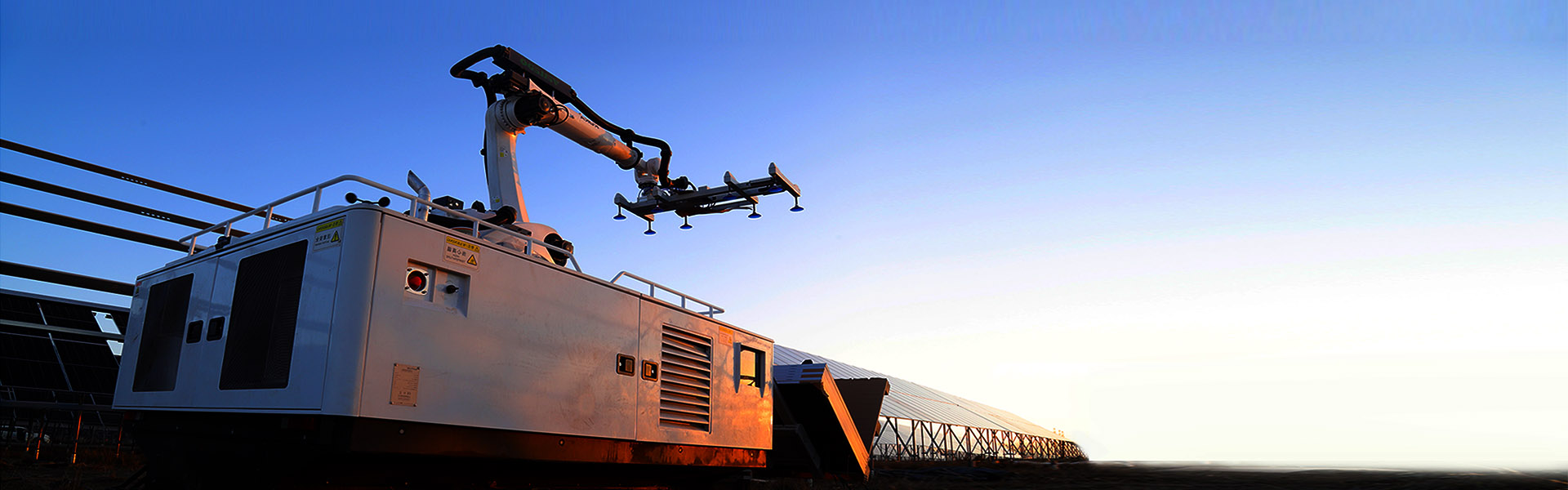




China’s photovoltaic industry is shifting comprehensively from large-scale capacity expansion toward improving overall system efficiency. According to data from the National Energy Administration, as of the end of August this year, China’s cumulative photovoltaic installed capacity reached 1,120GW, with more than 230GW of new installations added from January to August. In accordance with the requirements of Document No. 136, all provinces are gradually required to bring all on-grid electricity into the power market, and the fully market-oriented electricity pricing mechanism is forcing power plants to pursue more refined operations. Intelligent cleaning robots can improve power generation efficiency and reduce LCOE, making their importance increasingly prominent.
However, as high-quality flat land becomes increasingly scarce and power plant site selection continues to extend into more complex terrains, the difficulty of robot deployment and operation and maintenance is rising accordingly. In specific scenarios such as irregular layouts and frameless modules, how to provide more adaptable and cost-effective intelligent cleaning solutions has become a common concern across the industry. Currently, there are still three major challenges in photovoltaic cleaning:
First, in sites with irregular layouts, traditional solutions face adaptability issues. Many existing power plants did not consider integrating cleaning robots during the design stage, resulting in irregular module layouts, numerous short rows, and large differences in array heights. Such plants often limit the coverage capacity of a single robot, further increasing the cost per kilowatt-hour. How to achieve economically viable robot deployment without altering the plant structure has become a key industry pain point.
Second, emerging photovoltaic technologies call for corresponding cleaning solutions. The application of new technologies such as frameless modules has enriched PV scenarios but also brought changes to cleaning methods. This requires robots to match the characteristics of new structures with lower modification costs and better compatibility.
Third, power plant operational demands are becoming increasingly refined, requiring more flexible responses. In low-pollution or power-curtailed regions, power plants need cleaning solutions that can be flexibly configured and deployed on demand to avoid excessive investment and achieve the optimal balance between operation and maintenance costs and power generation returns.
The diversification of power plant demands is driving the diversification of cleaning robots, ensuring that each operating condition has the most suitable matching solution.
To address these segmented scenario pain points, Sunpure will launch a brand-new photovoltaic cleaning robot. Together with its existing mature products—such as suspended cleaning robots, commercial and industrial distributed robots, and shuttle systems—the company will build a more complete and comprehensive photovoltaic cleaning solution portfolio, precisely matching the most suitable combination matrix for each type of power plant.
The new product launch event will be held on October 20 at 14:30. Industry partners and friends are sincerely invited to scan the QR code to reserve the live broadcast and jointly witness the birth of a new star in photovoltaic cleaning!